
Back to About Us > Nigeria Secures Re-election to ITU Council as Dr. Tijani-Led Delegation Advances Country’s Global Digital Leadership
Renewed mandate builds on Nigeria’s decades-long Council presence and leadership on submarine cable resilience, child online protection and regional connectivity
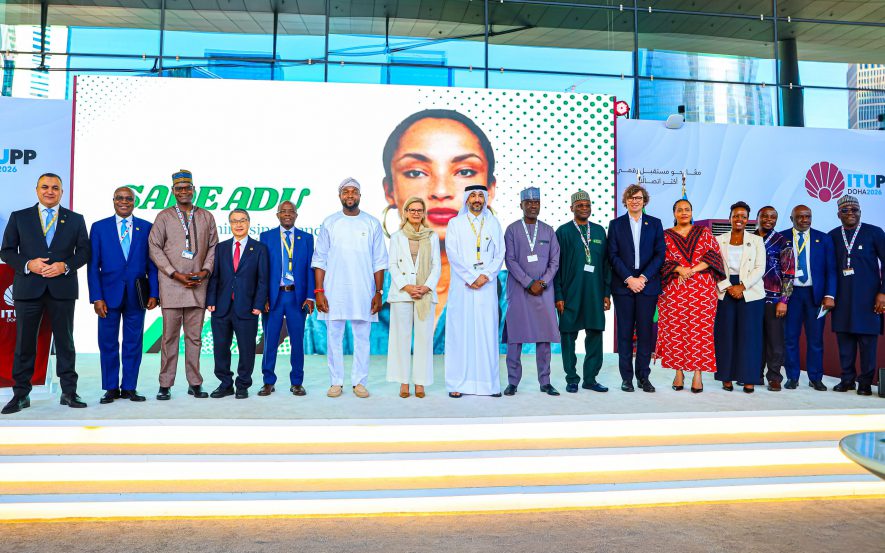
The Federal Republic of Nigeria has secured re-election to the Council of the International Telecommunication Union (ITU) for the 2027–2030 term, reaffirming the country’s growing influence in global telecommunications governance and its commitment to advancing inclusive digital development. The re-election was secured at the ITU Plenipotentiary Conference 2026 (PP-26), holding in Doha, Qatar, where Nigeria emerged among the 13 African countries elected to serve on the 48-member Council. The victory represents another important milestone in Nigeria’s longstanding engagement with the ITU and strengthens its voice in shaping international policies and decisions that will influence the future of global connectivity and digital development.
This achievement reflects the visionary leadership and unwavering support of His Excellency, President Bola Ahmed Tinubu, GCFR, whose commitment to strengthening Nigeria’s international partnerships and advancing the country’s digital economy has provided strategic direction for its global engagements. The Honourable Minister of Communications, Innovation & Digital Economy, Dr. ‘Bosun Tijani, led Nigeria’s delegation to Doha and provided strategic leadership throughout the campaign, supported by sustained diplomatic engagements, international advocacy and collaboration with relevant government institutions. The successful outcome further demonstrates the Federal Government’s determination to ensure that Nigeria remains actively represented in the international institutions and decision-making processes shaping the global digital economy.
Commenting on the achievement, Dr. Tijani said: “Nigeria’s re-election to the ITU Council is a strong affirmation of the confidence the international community has in our country’s leadership and contribution to the global digital agenda. Under the visionary leadership of President Bola Ahmed Tinubu, we are positioning Nigeria to play an increasingly influential role in shaping the policies, partnerships and innovations that will define the future of telecommunications. We will use this renewed mandate to advance meaningful connectivity, strengthen Africa’s voice and ensure that emerging technologies create opportunities for our people.”
Nigeria’s relationship with the ITU Council spans several decades, reflecting the country’s consistent participation in international telecommunications governance. ITU historical records show that Nigeria has served on the Council across multiple terms dating back to 1973. Its re-election for 2027–2030 therefore continues a longstanding institutional commitment to contributing to the policies, standards and strategic direction of global telecommunications.
Nigeria’s recent influence within the Union has also been strengthened by the leadership of Dr. Tijani. In June 2025, he was elected Vice-Chair of the ITU Council, marking a significant milestone in Nigeria’s representation within the Union’s leadership. He subsequently served as Chair of the 2026 Council session in Geneva, where he guided deliberations on emerging technologies, stakeholder engagement, sustainable funding models and institutional reforms. Under his chairmanship, the Council advanced important institutional and strategic work, including endorsing the revised Draft Strategic Plan for consideration at PP-26 and approving the Union’s operational plan for 2027. These contributions reinforced Nigeria’s capacity to build consensus among Member States and support the implementation of shared international priorities.
Beyond the Council itself, Nigeria has played an important role in advancing global efforts to strengthen the resilience of submarine cable infrastructure, which carries more than 99 per cent of international data traffic and underpins the global digital economy. In 2024, Dr. Tijani was appointed Co-Chair of the ITU International Advisory Body for Submarine Cable Resilience, established in partnership with the International Cable Protection Committee (ICPC). Under this initiative, Nigeria has helped advance international cooperation on cable protection, risk mitigation, infrastructure redundancy, timely deployment and repair, and the diversification of cable routes. Nigeria also hosted the International Submarine Cable Resilience Summit in Abuja in February 2025, bringing together governments, industry leaders, technical experts and international organisations to address the vulnerabilities affecting critical subsea infrastructure. The work of the Advisory Body culminated in the adoption of a landmark set of recommendations in July 2026, following further international engagement, including the subsequent summit in Porto, Portugal.
Nigeria’s leadership in this area also extends to strengthening regional digital infrastructure cooperation. In his engagements with ITU Member States in Doha, Dr. Tijani highlighted Nigeria’s work with Togo towards developing plans for a regional data park that would expand access to computing capacity for researchers and businesses across West Africa. He also outlined ongoing collaboration with Chad, Burkina Faso and the Republic of Benin to strengthen cross-border connectivity, with the intention of extending this cooperation to Cameroon. The Minister advocated for a shared regional protocol for digital infrastructure resilience, including mechanisms for rerouting network traffic and coordinating repairs when subsea cables fail. These initiatives reflect Nigeria’s belief that a more connected and resilient West Africa will improve affordability, strengthen regional economic integration and reduce the vulnerabilities associated with dependence on limited international connectivity routes.
“Nigeria’s re-election to the ITU Council is a strong affirmation of the confidence the international community has in our country’s leadership and contribution to the global digital agenda. Under the visionary leadership of President Bola Ahmed Tinubu, we are positioning Nigeria to play an increasingly influential role in shaping the policies, partnerships and innovations that will define the future of telecommunications. We will use this renewed mandate to advance meaningful connectivity, strengthen Africa’s voice and ensure that emerging technologies create opportunities for our people.”
Nigeria has equally maintained an active role in international efforts to promote child online protection and safer digital environments. Through the ITU Council Working Group on Child Online Protection (CWG-COP), Nigeria has contributed to global discussions, policy development and the sharing of national best practices. Nigerian representative Ms. Stella Chubiyo Erebor served as the African regional Vice-Chair of the Working Group, providing an important platform for Nigeria’s participation in advancing child online safety. This engagement builds on the country’s domestic efforts, including the Nigerian Communications Commission’s (NCC) establishment of a multi-stakeholder technical working group and the development of the Nigerian Child Online Protection Policy in 2014. Nigeria has also shared its regulatory frameworks, initiatives and reporting mechanisms with ITU Member States, contributing to wider international efforts to ensure that children can benefit from digital opportunities in safe and rights-respecting environments.
These contributions reflect the broader priorities Dr. Tijani articulated in Doha: that connectivity must be meaningful, affordable and accessible to everyone, regardless of where they live, and that people must have the skills to use it productively. He emphasised that the same principle must apply to Artificial Intelligence, with people across different countries and communities having the opportunity to build tools that reflect their languages, address their realities and solve problems they understand. This approach is particularly important for Nigeria, with its large and growing population and immense reservoir of talent. By advocating for inclusive connectivity, digital skills, local innovation and responsible technology development, Nigeria is working to ensure that the benefits of the global digital economy are more widely distributed.
The Federal Government recognises the collective efforts that contributed to this achievement, particularly the Ministry of Foreign Affairs, under the leadership of the Honourable Minister, Ambassador Bianca Odumegwu-Ojukwu, whose diplomatic engagements were instrumental in mobilising international support and strengthening Nigeria’s candidature. The Ministry also acknowledges the contributions of Nigeria’s Ambassador to Qatar, Ambassador Mahmoud Yakubu, and Nigeria’s Permanent Representative to the United Nations Office in Geneva, Ambassador Innocent Iwejuo, whose diplomatic engagements and coordination supported the campaign. Other members of the delegation included the Executive Vice Chairman and Chief Executive Officer of the Nigerian Communications Commission (NCC), Dr. Aminu Maida; the Executive Commissioner, Technical Services, Engr. Abraham Oshadami; and representatives of the Nigerian Communications Satellite Limited (NigComSat), National Space Research and Development Agency (NASRDA), Defence Space Administration (DSA), National Emergency Management Agency (NEMA), and relevant government institutions.
With this renewed mandate, Nigeria will continue to work with fellow Council members, African countries and the wider international community to promote affordable and meaningful connectivity, strengthen the resilience of digital infrastructure, advance responsible innovation and support cooperation in cybersecurity, capacity development and technology transfer. As Dr. Tijani stated in Doha, Nigeria will work with its African colleagues and partners across the Global North and Global South to make connectivity more affordable, networks more resilient and the digital world safer for everyone. The Federal Government appreciates the confidence placed in Nigeria by ITU Member States and remains committed to translating this renewed responsibility into stronger international partnerships, greater opportunities for investment and tangible benefits for Nigerians, Africa and the wider developing world.
Federal Secretariat Complex Phase I,
Annex III, Shehu Shagari Way,
FCT Nigeria.
P.M.B. 12578
© FMCIDE 2026, All rights reserved.
Kindly fill out the below and we shall keep in touch with you.
Error: Contact form not found.